
Wedding Planner, Photographer: How to Create a Styled Shoot That Actually Matters
For many photographers and wedding planners, organizing a styled shoot feels like the fastest, most autonomous way to make a name, redirect your aesthetic, or simply elevate your portfolio.
Styled shoots get criticized — sometimes fairly — especially when portfolios rely only on them. But used with intention, they can be powerful. Some creatives, like Lilly Red, have clearly shown that a styled shoot can reshape or reposition a brand when it’s infused with real creativity, vision, and savoir-faire.
A styled shoot is a laboratory. The best and the worst can come out of it.
Some artists walk away stronger, with a clearer voice. Others end up reproducing yet another shoot that blends into the feed, unnoticed, expensive, and ultimately frustrating for everyone involved.

What Actually Makes the Difference (and How Not to Ruin Your Next Shoot)
“Inspiration shoots” — as we used to call them back when we were shooting in France (between roughly 2014 and 2019) — have changed a lot.
They were all about excess: extravagant venues, insane amounts of florals, full table setups, jewelry, multiple gowns, sometimes even vintage cars. Without serious budget, it felt almost impossible to catch the attention of blogs or potential clients.
Here’s the good news: today, the difference is no longer about resources. It’s about concept.
A girl and a dress can be enough. A strong location helps. A bouquet is a bonus, not a requirement.

One Person. One Look.
Let’s be honest: it doesn’t even have to be a woman. A man works. A couple works too. Of course, a female figure may speak more immediately to future brides, but that’s not the point.
What matters is this: less investment can lead to more impact.
In response to the constant escalation of bigger, pricier shoots, some creatives realized something important: There will always be a shoot bigger than yours.
COVID accelerated this shift. Smaller teams, tighter constraints, and suddenly, ideas mattered more than means. Some artists took the opposite direction and started creating simpler, more exclusive, more editorial projects.
Take, for example, a shoot done by Lilly Red: lingerie, in a sculptor’s workshop. Now compare that to the hundredth shoot with: classic venue + classic flowers +
classic table + classic gown + classic couple pose
Which one stops your scroll?
Exactly. This isn’t meant to speak to everyone (we’ll come back to that later). But it does one thing extremely well: it grabs attention.
Be Different
This is the most common trap of today’s “mainstream” styled shoots: You invest time and money into your styled shoot… only to produce something safe, classic (and already seen).
If you’ve never done one and just need a clean bridal image for your website header — fine. But if you’ve done a few already, ask yourself:
What makes this one worth stopping for?
Being different doesn’t mean creating something absurd or disconnected from your audience. But it does mean taking a position.
We’ve lost count of how many clients mention our shoot with a blue dress and how many collaborations came from our “Excuse My French” project. And honestly? The risk wasn’t huge. We simply let go of excessive florals, overly styled tables, and cheesy forehead kisses, and introduced a blue dress with strong editorial poses. And suddenly, people noticed.
Style often starts the moment you accept that not everyone will like it.
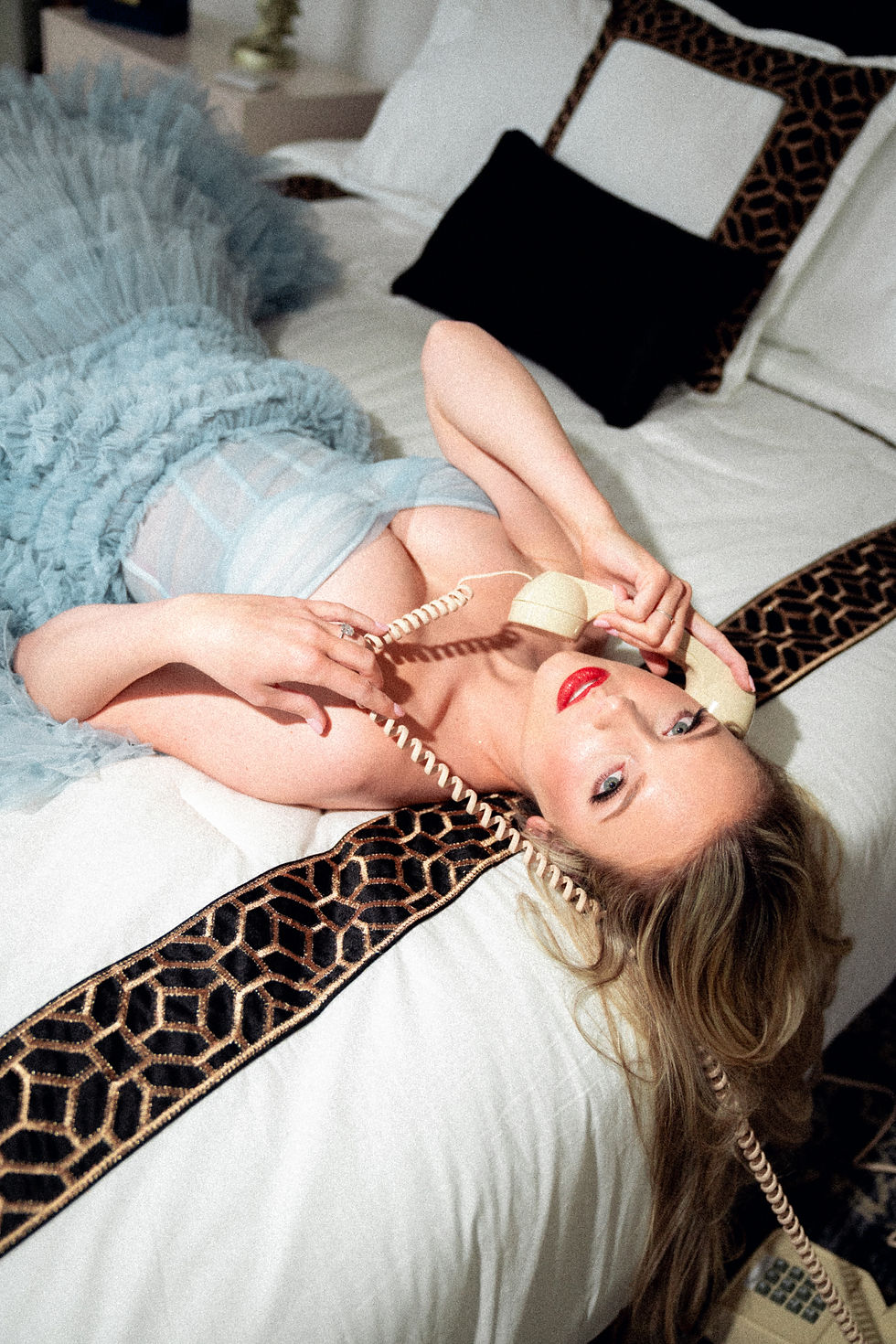
Speak Directly to Your Client
“One person, one dress”… almost.
Accessories, styling, framing, and the way you photograph all speak to a very specific audience. Ours might not be yours.

You have a target client. Or maybe you’re trying to attract a new one because your current weddings don’t fully align with who you are creatively.
That’s where styled shoots become strategic. Even when you push creativity, nothing should be left to chance. The images must still carry the visual codes your ideal client responds to.
That’s the real secret:
push the cursor
— but in the right direction.

Example:If your clients are nature-driven (let’s say you’re a planner in Colorado), why recreate yet another ceremony arch with a mountain view? We’ve all seen it.
Instead: a bride seated on a tree branch, shot from below, her reflection in a lake, an editorial moment among cattle, or bring in a falconer and let the bride hold an eagle
Trust us. That makes people stop scrolling!
A fake couple holding hands in front of four vendors pretending to be guests? We’ve already seen it!
Fewer Photos, More Shoots
We’ll admit it: Instagram dictates how images are consumed.
Attention spans are short. Very short.
That’s why putting everything into one massive shoot and recycling the same vibes/images again and again makes less sense today than creating small, fast, intentional projects.
One styled shoot can easily become:
3–4 strong posts
~20–25 standout images
It’s far more effective to release fresh, original work regularly than to overload your feed with 50 images from the same big production.
In the End
No one is fooled by a fake wedding.
Clients know the difference, and they will always ask to see full galleries of real weddings. Styled shoots are no longer about pretending. They’re about expression.
Clients understand that conceptual shoots showcase creativity. They see them for what they are: a demonstration of your ability to imagine, to surprise, to elevate.
And when done right, that’s exactly why they choose you.


Comments